Recursive self-improvement (RSI)
Agents that revise their own harnesses, exploration policies, and learning procedures.

An independent research lab focused on continual learning in AI systems.
Based in Bangalore, India.
Agents that revise their own harnesses, exploration policies, and learning procedures.
Recursive decomposition, external context, and inference-time optimization of agent harnesses.
Persistent procedural knowledge, feedback-driven skill optimization, and verification across tasks.
Textual transition models, executable environments, and adaptive curricula for exploration.
Reusable decomposition strategies that transfer across task lengths and domains.
Search over agent architectures and research methods, with improvements evaluated on held-out tasks.
01 / Planned product
A minimal, bloat-free harness built on Recursive Language Models by Alex L. Zhang, Tim Kraska, and Omar Khattab, with extensibility inspired by Pi.
For a young project with a small community, extensibility needs a dependable starting point. The core team will ship and maintain modules, so users can add capabilities without having to evaluate community extensions or work out which ones are still maintained.
02 / Planned product
A recursive self-learning system designed to generalize across domains and adapt the learning process itself for faster results.
Learning will be easy to toggle off: explore and improve during development, then freeze learned behavior for production when stability matters more than accelerated learning.
Notes from our research into agents that learn through experience.
Ideas, methods, and experiments.

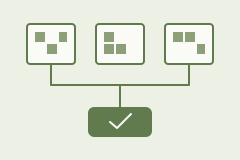
What our ARC-AGI-3 experiments taught us about shared skills, regression checks, and specialization.
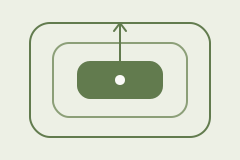
What changes when an agent learns a task, improves its methods, and revises how it learns.
How external context, code, and focused model calls make large tasks easier to work with.

Why our work on a self-learning browser led us to study agents that improve through experience.
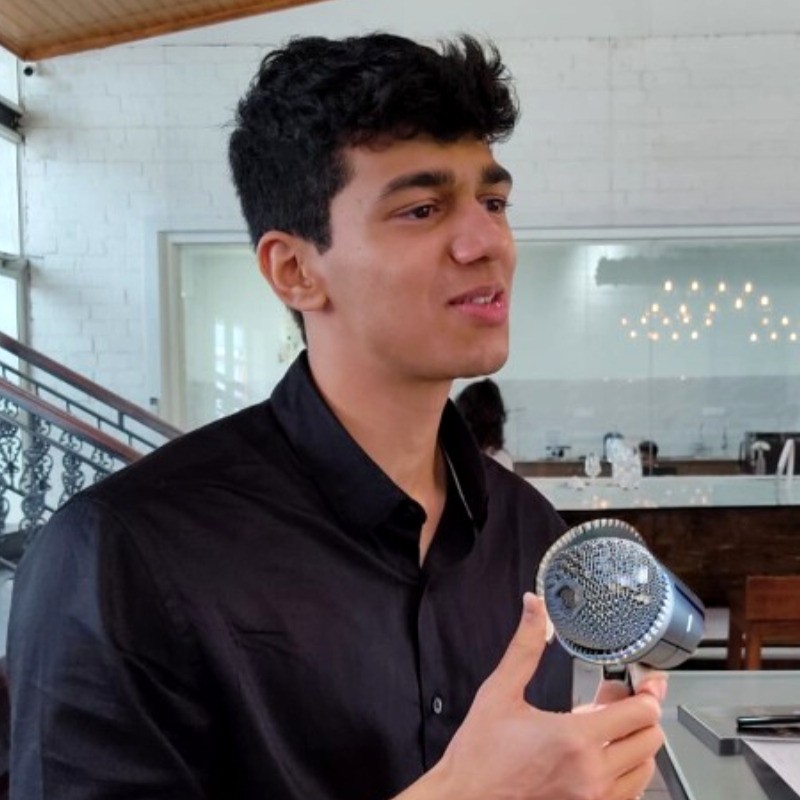
The people behind recursa labs.
Building and studying agents that learn through experience.